We've Scored Dozens of Pittsburgh Business Websites for AI Search. Here's What the Numbers Actually Mean.


Over the past several months, we've run AI visibility audits on dozens of businesses across Pittsburgh North. Plumbers in Cranberry Township, attorneys in Wexford, contractors in Mars, restaurants in McCandless. The average score across all of them sits right around 42 out of 100. Most business owners are surprised. Some are frustrated. Almost all of them want to know the same thing: what does that number actually mean, and what moves it?
This post breaks that down.
The Score Is a Trust Signal, Not a Traffic Number
The first thing to understand is that an AI visibility score isn't measuring how many people visit your website. It's measuring how much trust AI engines can place in your business when someone asks them for a recommendation.
When a resident of Cranberry Township asks ChatGPT "what's the best HVAC company near me," the AI doesn't run a live web search and rank results. It draws on what it already knows about local businesses from training data, citations across the web, and signals that tell it a business is real, current, and well-regarded. A business with a score of 70 has given AI enough of those signals to get recommended with confidence. A business with a score of 35 hasn't. Not necessarily because the business is bad, but because the signals aren't there yet.
That's an important distinction. The gap between showing up and not showing up in AI search often has nothing to do with the quality of your actual work. It's about whether the AI has enough information to feel comfortable recommending you in the first place.
What the Three Component Scores Measure
Every GEO audit produces three component scores alongside the overall: On-Page SEO, AI Visibility, and Local SEO. They each measure something different, and they tend to fail in different ways.
On-Page SEO is the most familiar to business owners who've worked with a web designer or marketing agency before. It looks at whether your pages have clear title tags, useful meta descriptions, structured headings, and enough substantive content for an AI to understand what your business does and who it serves. A lot of businesses have decent-looking websites that score poorly here because the content is thin. Three sentences about each service, a contact form, and not much else. AI engines need more than that to understand your expertise.
AI Visibility is the score most businesses haven't thought about at all before we audit them. It measures signals specifically relevant to generative AI engines: whether your content answers the kinds of questions people actually ask, whether you have FAQ content that can be directly cited in AI answers, whether you demonstrate real expertise rather than just listing services, and whether your business shows up in authoritative third-party sources. This score is consistently the lowest of the three across every market we've looked at.
Local SEO measures how well your business is established as a legitimate local entity. This includes your Google Business Profile completeness, citation consistency across directories, whether your name, address, and phone number appear clearly on your website, and whether you have reviews that signal active customer engagement. Local businesses often assume they're fine here because they have a Google listing. But that listing being incomplete or outdated is frequently the thing dragging their overall score down.
What a Score Below 50 Usually Means
When we audit a business and find an overall score in the 30 to 50 range, the pattern is almost always the same. The website exists, it looks reasonably professional, and it has the basic pages you'd expect. But it's missing the depth and specificity that AI engines need to confidently recommend it.
The service pages don't explain what the business actually does in enough detail. There's no FAQ content. The business isn't mentioned anywhere outside of a basic Google listing. The schema markup, which is the structured data that tells AI engines what type of business you are and where you're located, is either missing or incomplete. Citations across directories are inconsistent. The Google Business Profile hasn't been touched in months.
None of these are catastrophic problems on their own. But they add up. An AI engine without enough reliable information about your business will skip you and recommend someone it knows more about.
What a Score Above 70 Looks Like
The businesses we audit that score in the 70-plus range are doing a few things consistently that the others aren't.
Their service pages are substantive. If you're a roofing contractor and your page about roof replacement actually explains the process, the materials you use, the areas you serve, and what sets you apart from other Cranberry Township roofers, that's meaningfully different from a page that just says "we replace roofs, call for a quote." AI engines can read that detail and use it when someone asks a specific follow-up question.
They have FAQ content that answers real questions. Not "what are your hours" and "do you take credit cards." Questions like "how long does a roof replacement take in Western PA" or "what type of roofing holds up best in Pittsburgh winters." That is the kind of content AI engines pull from when answering queries.
They show up in local publications, neighborhood groups, business directories, and industry sites. Not because they ran a link-building campaign, but because they're active local businesses with a real presence outside their own website.
And their local signals are consistent. Same business name, address, and phone number across every directory. An active Google Business Profile with recent posts and replies to reviews. Schema markup that clearly identifies the business, its location, and its service area.
The Score That's Almost Always the Biggest Gap
AI Visibility is consistently the lowest of the three component scores across every audit we've done. That's not surprising. Most businesses built their websites before AI search was something worth thinking about, and nothing about traditional web design prepares a site to be cited in an AI answer.
Improving it is real work. It means building out content that demonstrates actual expertise in your category, writing in a way that answers specific questions rather than just describing your services, and doing that work consistently over time. It's not a one-time fix. The businesses seeing meaningful improvement are the ones treating AI visibility the same way they'd treat building a reputation in a new market: sustained effort, not a quick campaign.
How Long Does It Take to See Results?
It depends on which signals you're working on. On-page changes get picked up by search engines within a few weeks. Local SEO improvements, citation cleanups, Google Business Profile activity, and new reviews typically show impact within 30 to 60 days. AI Visibility takes longer because it depends on how often AI systems update their knowledge of your business, but businesses that make meaningful content improvements generally start seeing results in the 60 to 90 day range.
The businesses in Pittsburgh North that are working on this now have a real advantage. Most of their local competitors haven't started yet. That window gets smaller as more businesses figure this out.
What to Do With Your Score
If you've run a GEO audit, the score is the starting point, not the answer. The work comes after. Look at your lowest component score and dig into what specifically is missing. AI Visibility gaps usually mean your content isn't deep enough to establish real expertise. Local SEO gaps usually mean your profile needs consistent attention or your citations are inconsistent. On-page gaps usually mean your site isn't giving AI engines clear enough signals about what you do and where you do it.
Building AI visibility takes time. It's closer to building a reputation than running an ad. The businesses seeing real results are the ones that have accepted that and are doing the work anyway.
If you haven't run an audit yet, that's the right place to start. It's free, it takes about 60 seconds, and it gives you specific scores with specific gaps rather than a vague sense that something might need work. Knowing exactly where you stand is the first step to doing anything about it.
Keep Reading
More articles

5 Things Real Estate Agents in Cranberry Township and Wexford Can Do This Week to Show Up in AI Search
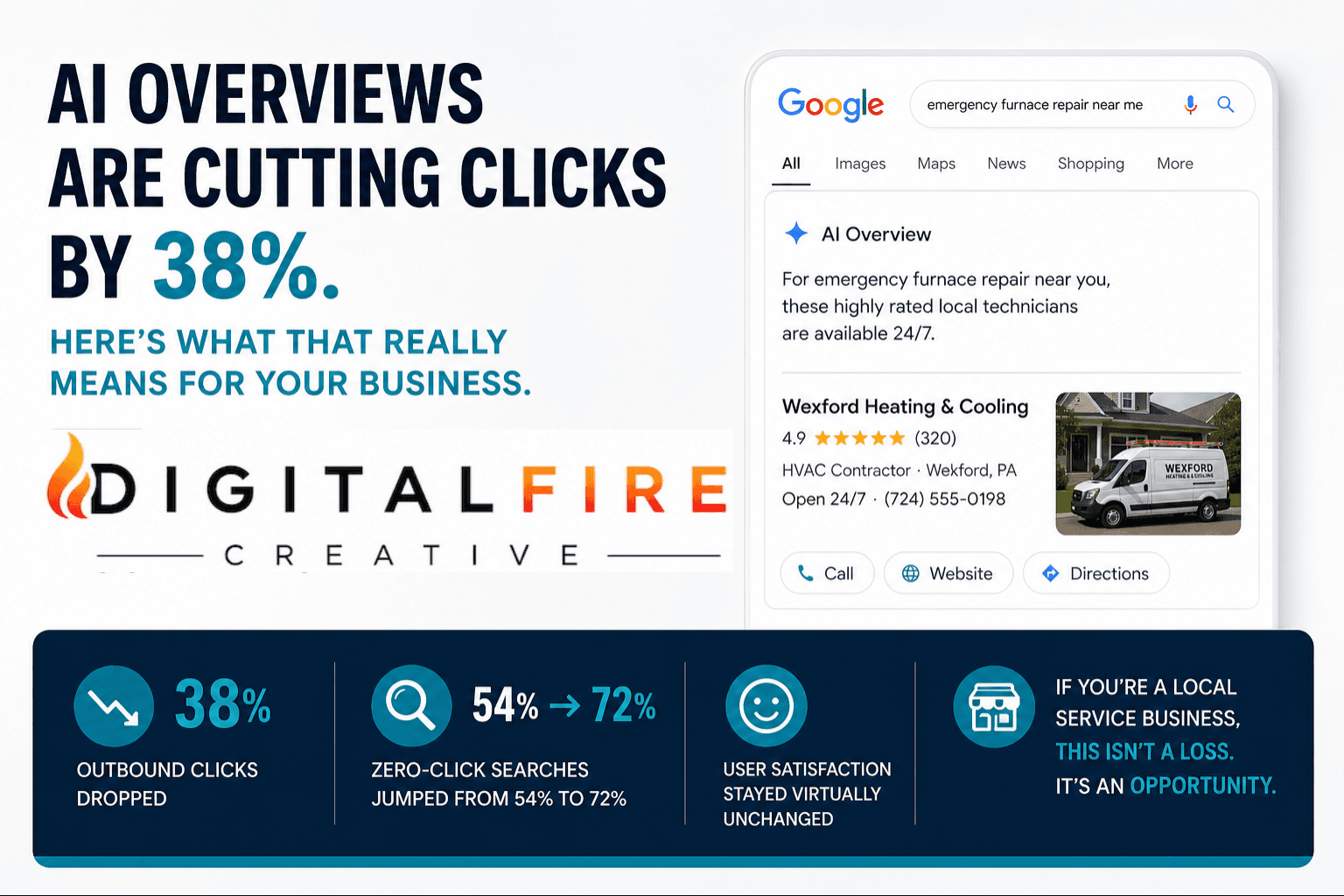
Why the 38% Drop in Google Clicks Is Good News for Local Service Businesses
Why Pittsburgh Businesses Should Choose an AI SEO Agency Over a Traditional SEO Company
Free Check
See how your business ranks in AI search
Get a free GEO report in 60 seconds, no card, no obligation. We will show you exactly where you stand and what your biggest opportunities are.
Get Your Free AI SEO Report →